POSTER SESSIONS
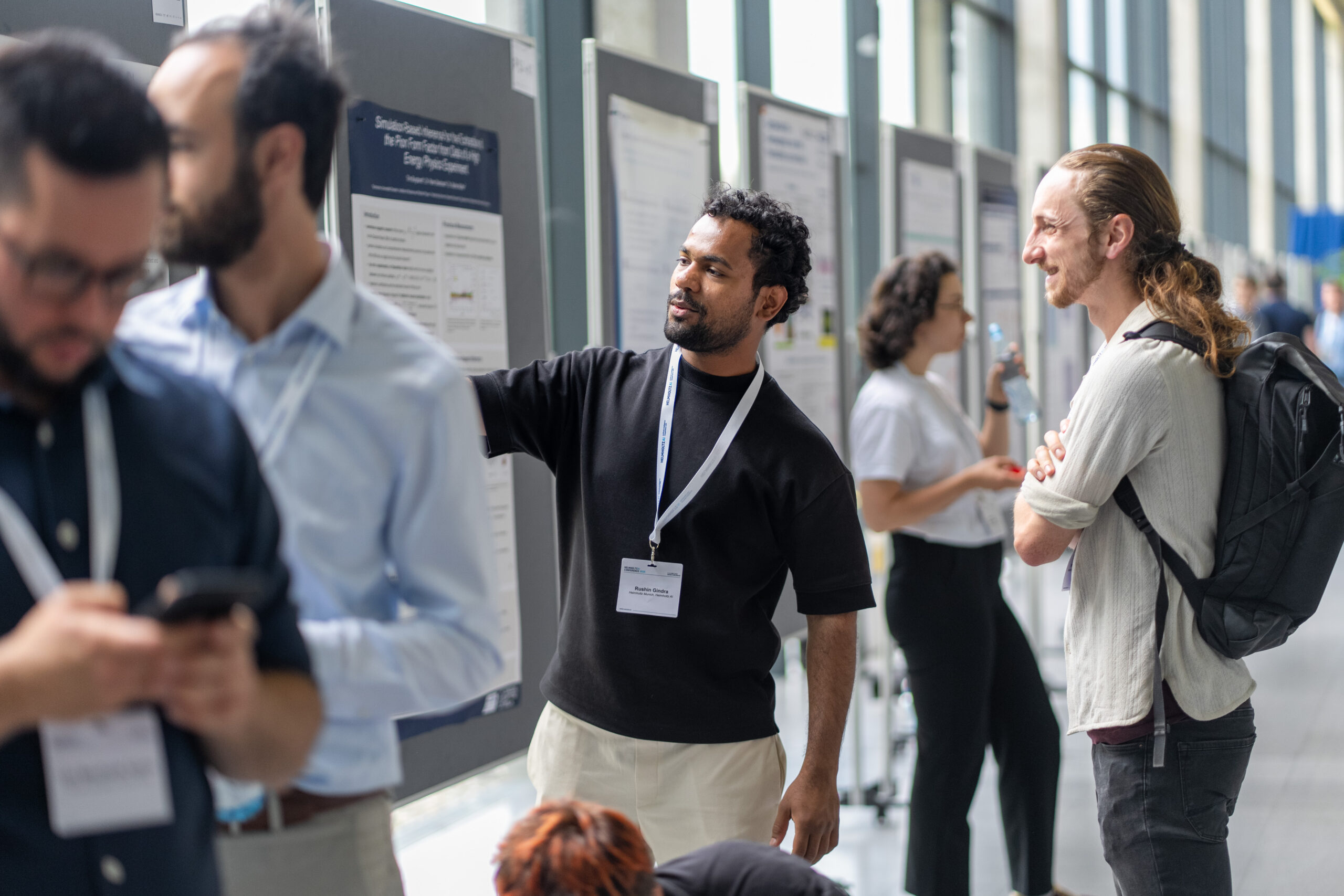
Posters were a central part of the conference programme and provided a highly interactive setting to present and discuss new ideas, methods, and results. Two dedicated Poster Sessions took place during the conference, offering ample time for in-depth exchange and networking with peers.
Poster Sessions:
POSTER SPOTLIGHT TALKS
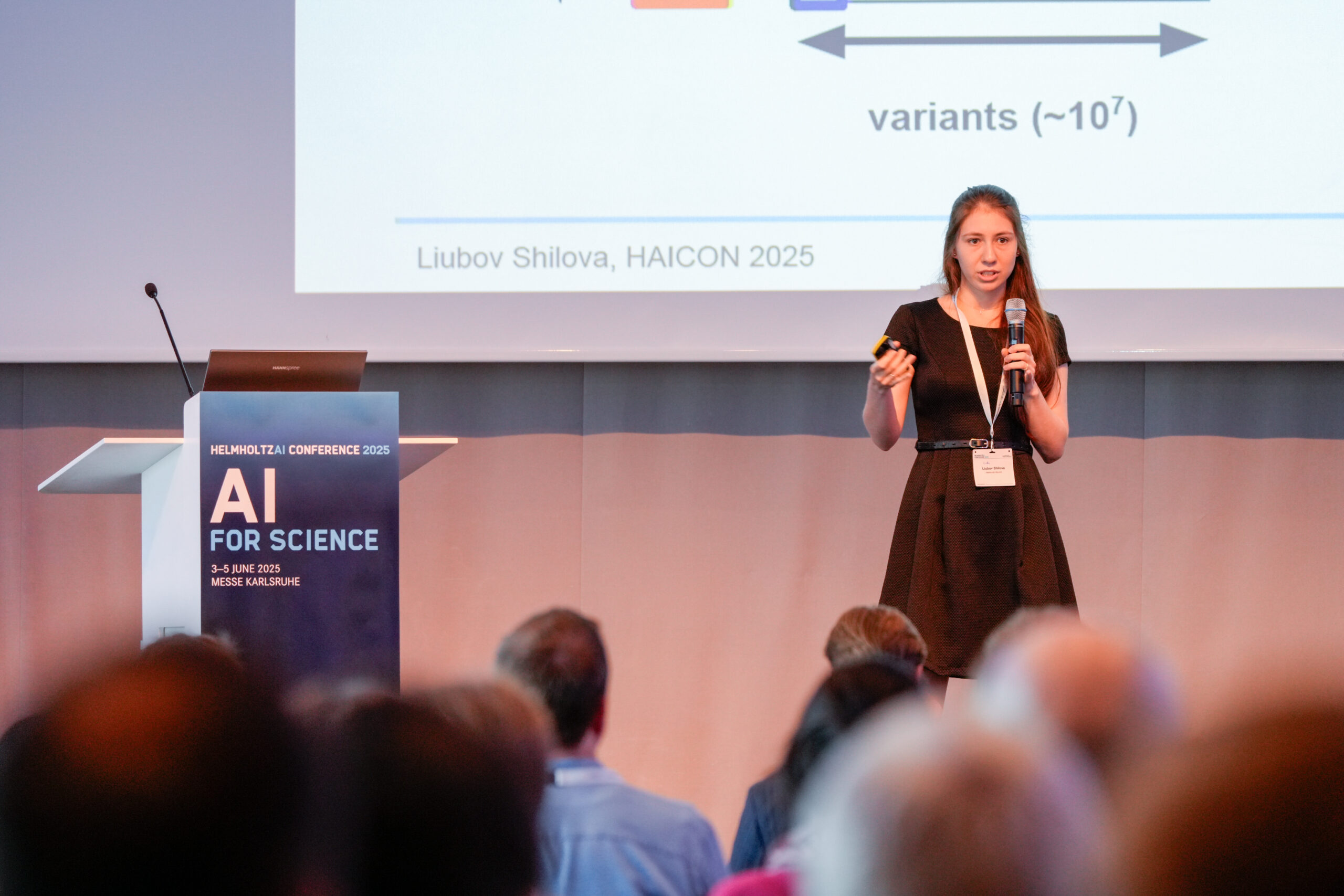
From all accepted poster submissions, a selection was invited to give short Poster Spotlight Talks. These concise presentations highlighted outstanding posters and gave authors the opportunity to present their work to the full audience ahead of the poster sessions.
The Poster Spotlight Talks took place at the following times:
Tuesday, 9 June, 3:15pm – 3:30pm: Poster Spotlight Talks I | Poster Spotlight Talks II
Wednesday, 10 June, 3:15pm – 3:30pm: Poster Spotlight Talks III | Poster Spotlight Talks IV
POSTER AWARD
To highlight great poster contributions at HAICON, posters were evaluated by expert reviewers and, for the first time, we were also experimenting with an LLM-based assessment.
Reviewer’s Choice Award
The Reviewer’s Choice Award was based on a structured evaluation by an expert jury. Posters were assessed across three main aspects:
Scientific Soundness
Posters that fully met this criterion clearly defined the problem and contribution, and described the data, methods, and evaluation process in a transparent and understandable way. Key findings and limitations were summarized, and relevant references and accessible resources were provided to support transparency and further exploration (including FAIR principles where applicable).
Scientific Presentation
Posters that fully met this criterion were clearly structured, readable, and easy to follow. The content was presented concisely, visually well-organized, and accessible to an interdisciplinary audience. Key concepts were explained where necessary, and presenters communicated their work clearly while demonstrating a strong understanding of their research.
Scientific Relevance (Novelty & Impact)
Posters that fully met this criterion presented a substantive and clearly articulated contribution that advanced the field beyond incremental improvements. The contribution was well differentiated from existing approaches, its relevance and potential implications were clearly described, and it demonstrated a level of originality and impact that stood out as scientifically outstanding.
The winners:
1st Prize | NTT DATA (GPU-hour voucher valued at approximately 1,000 EUR at NTT DATA’s AI Lab in Munich)
- Zakaria Elabid — MolecuLA: Learning Molecules As A Language For Generative And Interpretable Chemistry
2nd Prize | Cisco (one-day AI Workshop “Secure AI Factory”)
- Lukas Ruff — Atlas 2: Foundation Models for Clinical Deployment
3rd Prize | Mistral AI (1-year Pro Subscription)
- Yannick Kees — Improving Pedestrian Detection through Temporal Movement Estimations
LLM’s Choice Award
As an experimental addition, the LLM’s Choice Award allowed AI-based evaluation of submitted posters.
The evaluation was carried out using models with enterprise licenses, meaning that submitted content was processed under strict data protection settings: it was not used for model training, not stored beyond the evaluation process, and not shared with external parties. The model assessed the posters based on the same criteria as the Reviewer’s Choice Award, with one exception: since the model couldn’t attend the poster session, the in-person presentation was replaced by an evaluation of how clear and self-explanatory the poster was on its own.
Transparency and Feedback
By clearly defining the evaluation criteria for the Reviewer’s Choice Award, the judging process was made more transparent and easier to follow.
The LLM’s Choice Award was introduced as an experiment. It was not assumed that LLM-based evaluation was more reliable or meaningful than expert review, and the limitations and potential biases of such systems were acknowledged. The aim was to explore this approach and gain a better understanding of its strengths and shortcomings in evaluation settings.
At the same time, it was recognized that no evaluation framework was perfect. The poster award process was considered an evolving initiative, and feedback was welcomed to further improve future editions.
The winners:
1st Prize | NTT DATA (GPU-hour voucher valued at approximately 1,000 EUR at NTT DATA’s AI Lab in Munich)
- Lukas Thede — CapTrack: Multifaceted Evaluation of Forgetting in LLM Post-Training
2nd Prize | Cisco (one-day AI Workshop “Secure AI Factory”)
- Simon Roschmann — SOTAlign: Semi-Supervised Alignment of Unimodal Vision and Language Models via Optimal Transport
3rd Prize | Mistral AI (1-year Pro Subscription)
- Kushal Ramakrishna — Machine-Learned Interatomic Potentials for Fe–Ni Alloys: Benchmarking MACE Models for Magnetism and Phase Stability